Competitive Racing for Life. Is It Really Possible?

Yes, it is.

Thanks to the analysis of tens of thousands of cycling time trial results, the Veteran Time Trials Association (VTTA) has developed a unique age-adjustment times (AAT) system that enables riders aged 40 and over to compete fairly, regardless of age or gender.

The principle is simple. From the age of 40, riders are awarded an age allowance that reflects the gradual physiological changes that occur as we grow older. The allowance increases by a few seconds each year and rises more progressively as riders reach their 70s and 80s, when reductions in muscle mass and physical performance become more significant.

The result is a system that gives every rider an equal opportunity to compete for honours on age-adjusted time, making competitive racing a genuine lifelong sport.

Being a VTTA member does not affect your participation in your club or team activities. You continue to ride in the same events as everyone else, with your performance counting both in the organiser’s scratch competition and in VTTA competitions.

Many riders will already have noticed that Cycling Time Trials (CTT) now displays age-adjusted times on competitors’ profiles. The VTTA downloads these results and automatically incorporates them into its own competitions and rankings, allowing members to compare their performances fairly against riders of all ages.

In addition, many event organisers now offer AAT prizes as well as  VTTA team competitions, where prizes are awarded to the three fastest VTTA members on age-adjusted time. Individual age-adjusted awards are also frequently available, providing even more opportunities for recognition and competition.

To help current and prospective members learn more about the VTTA, we are holding an online Question and Answer session on Thursday 29th October at 7:00 pm.

This will be an opportunity to find out how the association works, how age-adjusted competition is calculated, what benefits membership offers, and how the VTTA helps riders remain competitive throughout their cycling journey.

To obtain a Zoom link for the meeting, please email Scott Westwood at scott.westwood41@icloud.com.

After all, competitive racing doesn’t have to end at 40, 50, 60 or even 80. With the VTTA’s age-adjustment system, competitive racing really can be for life.

If you were unable.to.join us at the Q&A then just log onto https://www.vtta.org.uk/ for more details
Season Summary: Closing Out 2026 on a High

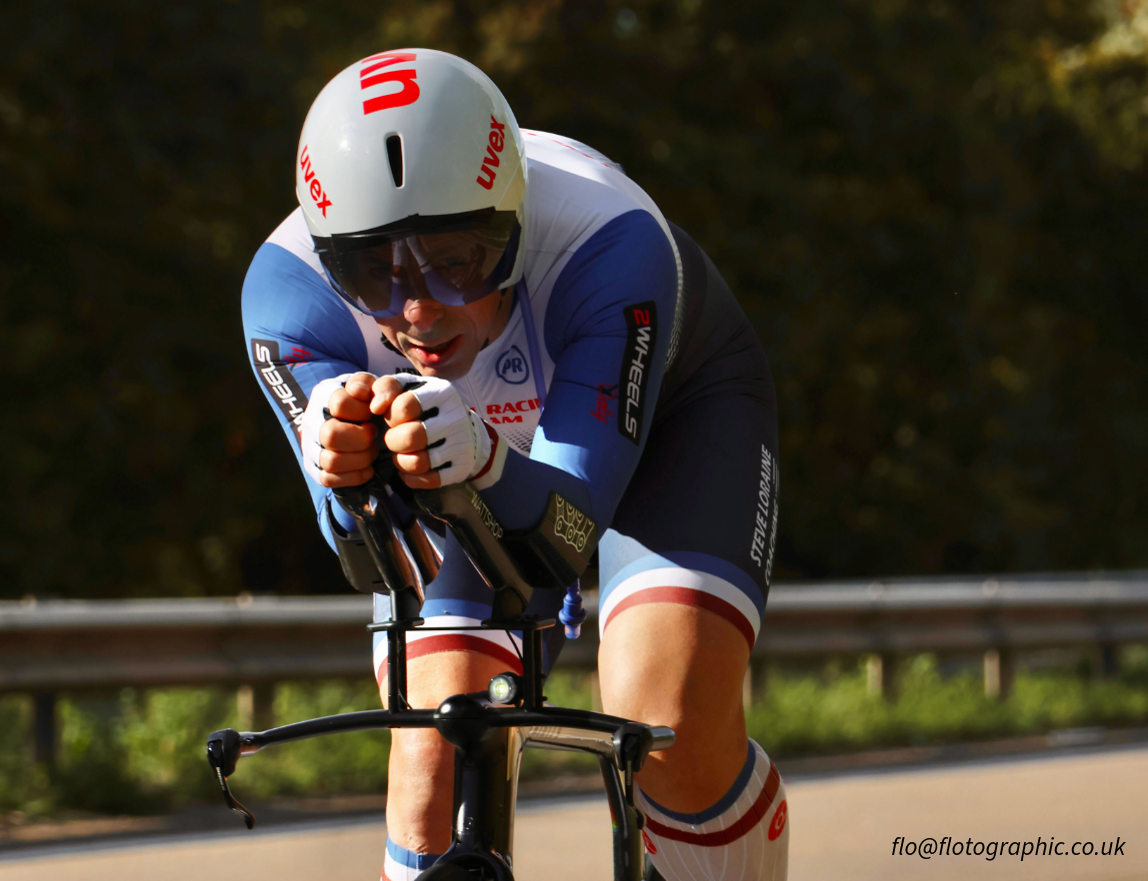
What a fabulous way to wrap up my 2026 racing season — under blue skies on a sunny 50‑miler in Wales. After four years of disrupted seasons, operations, illness, and constant stop‑start setbacks, this was my first uninterrupted year back to full health. And what a difference consistency makes.
From the very first training block, the season built steadily. No shortcuts, no hero sessions — just weeks and months of controlled, low‑steady miles, guided by Tymewear ventricular threshold data to dial in pacing with real accuracy. Add in structured TT pacing plans across different distances, and the result was exactly what good coaching and good discipline should deliver: sustained power, repeatable performances, and confidence in the process.
This year I produced my fastest 25‑mile and 50‑mile time trials in seven years, finishing with:
54:32 for 25 miles
1:53:57 for 50 miles — my third fastest 50 ever
Those numbers mean more to me than just times on a results sheet. They represent a season where training aligned with health, where the plan held firm, and where patience finally paid off.
Now the focus shifts to 2027. I’ll be turning 60 — a milestone that for some feels less like a limit, to me more like an opportunity. With another winter of structured work ahead, Mr Semple fully intends to deliver even more breakthrough rides next season.
Age is just a number. Consistency is the real engine. And when you commit to the process, great things happen.
Here’s to the next chapter. 🚴‍♂️🔥

Late Season Training: Making the Most of Your Final Push

Late Season Training: Making the Most of Your Final Push

It’s August in the UK, and the end of the racing season is fast approaching. Hopefully, you’ve been consistent this summer, maintaining your aerobic fitness between events and incorporating one or two structured sessions in each mesocycle. The good news? You may still have time for one last focused training block leading into your key events.

Timing Your Final Block

Most cyclists start feeling noticeably stronger and faster after 2-3 weeks of consistently hard training, with peak benefits typically appearing around 4-6 weeks. For those of you—like myself—who have one or two target events in mid-September and early October, we still have one opportunity to lift our fitness and race pace.

Two Paths Forward

Option 1: Late Season Peak (September/October Events)

If your key events are still 4-6 weeks away, you can commit to one final focused training block. This is your chance to:

  • Sharpen race-specific fitness
  • Fine-tune power output for your target events
  • Build confidence through structured progression

Option 2: Season Wind-Down (Early September Events)

If your season ends in early September, it’s now time to gradually reduce volume while maintaining intensity. This approach will help ensure you:

  • Don’t lose any top-end power
  • Carry minimal fatigue into your final races
  • Arrive at the start line fresh and ready

The Recovery Reality Check

Recovery is crucial in both scenarios. Without adequate recovery within each mesocycle and microcycle, your body won’t have time for adaptation. If you’re feeling flat and your fitness has plateaued, chances are you need more recovery—not additional hard sessions.

Key insight: The fitness you have today reflects what you did 4-6 weeks ago, and the fatigue you feel today comes from what you’ve done in the last 7 days.

Smart Training for Late Season Success

Focus on SMART training that is:

  • Specific to the type of racing you’ll be doing
  • Matched to the duration of your target events
  • Appropriate for the terrain you’ll be competing on

Remember, this final phase isn’t about building massive fitness gains—it’s about optimizing what you’ve built all season and arriving at your key events in peak condition.

Make these final weeks count through intelligent training choices, and here’s to finding some excellent late-season form!