Competitive Racing for Life. Is It Really Possible?

Yes, it is.

Thanks to the analysis of tens of thousands of cycling time trial results, the Veteran Time Trials Association (VTTA) has developed a unique age-adjustment times (AAT) system that enables riders aged 40 and over to compete fairly, regardless of age or gender.

The principle is simple. From the age of 40, riders are awarded an age allowance that reflects the gradual physiological changes that occur as we grow older. The allowance increases by a few seconds each year and rises more progressively as riders reach their 70s and 80s, when reductions in muscle mass and physical performance become more significant.

The result is a system that gives every rider an equal opportunity to compete for honours on age-adjusted time, making competitive racing a genuine lifelong sport.

Being a VTTA member does not affect your participation in your club or team activities. You continue to ride in the same events as everyone else, with your performance counting both in the organiser’s scratch competition and in VTTA competitions.

Many riders will already have noticed that Cycling Time Trials (CTT) now displays age-adjusted times on competitors’ profiles. The VTTA downloads these results and automatically incorporates them into its own competitions and rankings, allowing members to compare their performances fairly against riders of all ages.

In addition, many event organisers now offer AAT prizes as well as  VTTA team competitions, where prizes are awarded to the three fastest VTTA members on age-adjusted time. Individual age-adjusted awards are also frequently available, providing even more opportunities for recognition and competition.

To help current and prospective members learn more about the VTTA, we are holding an online Question and Answer session on Thursday 29th October at 7:00 pm.

This will be an opportunity to find out how the association works, how age-adjusted competition is calculated, what benefits membership offers, and how the VTTA helps riders remain competitive throughout their cycling journey.

To obtain a Zoom link for the meeting, please email Scott Westwood at scott.westwood41@icloud.com.

After all, competitive racing doesn’t have to end at 40, 50, 60 or even 80. With the VTTA’s age-adjustment system, competitive racing really can be for life.

If you were unable.to.join us at the Q&A then just log onto https://www.vtta.org.uk/ for more details
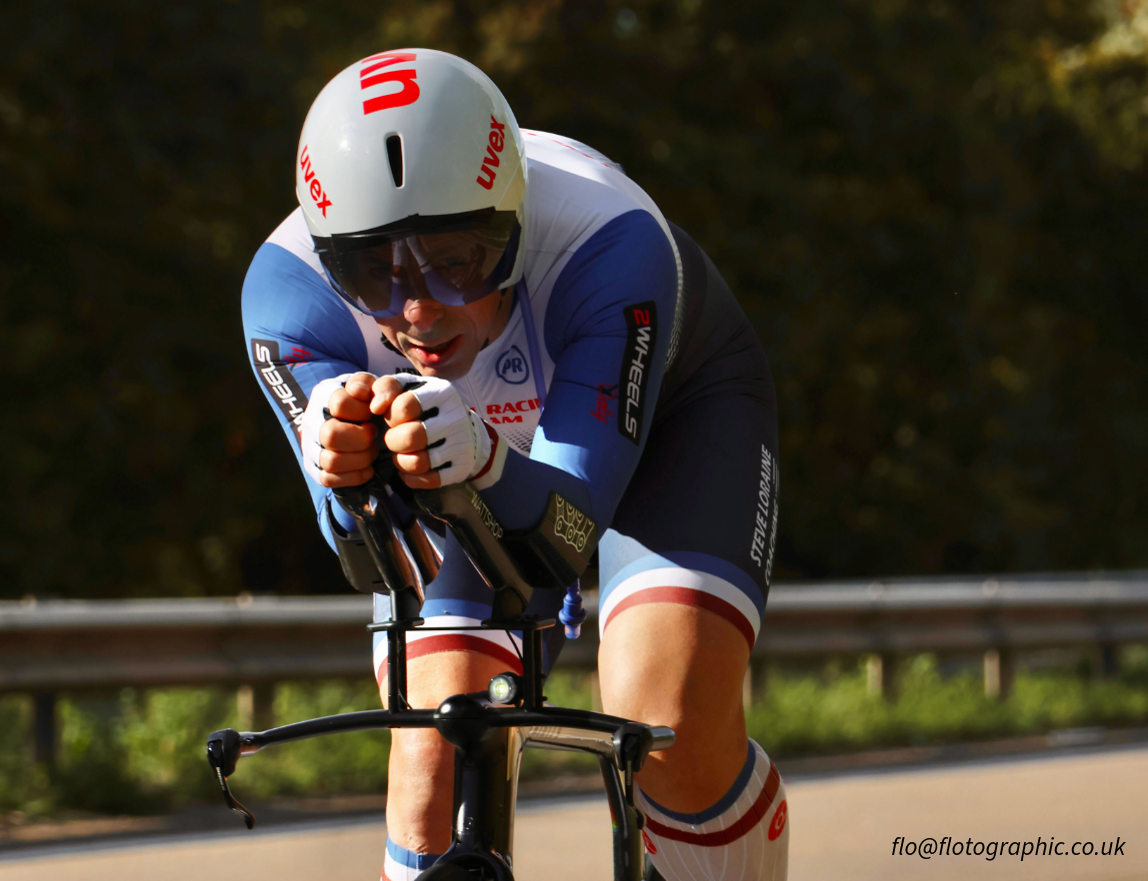
Season Summary: Closing Out 2026 on a High

What a fabulous way to wrap up my 2026 racing season — under blue skies on a sunny 50‑miler in Wales. After four years of disrupted seasons, operations, illness, and constant stop‑start setbacks, this was my first uninterrupted year back to full health. And what a difference consistency makes.
From the very first training block, the season built steadily. No shortcuts, no hero sessions — just weeks and months of controlled, low‑steady miles, guided by Tymewear ventricular threshold data to dial in pacing with real accuracy. Add in structured TT pacing plans across different distances, and the result was exactly what good coaching and good discipline should deliver: sustained power, repeatable performances, and confidence in the process.
This year I produced my fastest 25‑mile and 50‑mile time trials in seven years, finishing with:
54:32 for 25 miles
1:53:57 for 50 miles — my third fastest 50 ever
Those numbers mean more to me than just times on a results sheet. They represent a season where training aligned with health, where the plan held firm, and where patience finally paid off.
Now the focus shifts to 2027. I’ll be turning 60 — a milestone that for some feels less like a limit, to me more like an opportunity. With another winter of structured work ahead, Mr Semple fully intends to deliver even more breakthrough rides next season.
Age is just a number. Consistency is the real engine. And when you commit to the process, great things happen.
Here’s to the next chapter. 🚴‍♂️🔥

Racing With Purpose: Why Progress Matters More Than Placings

Saturday’s 10‑mile time trial offered one of those rare moments in an athlete’s journey where the numbers, the sensations, and the bigger picture all align. At 60 years old, this rider—someone I’m proud to coach—produced her best power figures ever. Not just a strong ride, not just a solid effort, but a genuine breakthrough: a new FTP based on her 20‑minute power, and her fastest 10‑mile time of the 2026 season.

That alone is worth celebrating. But the real story goes deeper.

Performance vs. Outcome: Why They’re Not the Same

Despite delivering her strongest ride to date, she finished one minute slower than her personal best from last season. That might seem contradictory at first glance, but it’s a reminder of a truth every athlete eventually learns: speed is influenced by many things we cannot control—weather, course conditions, traffic, equipment changes, and even the simple reality of how fast the day is.

This season she’s riding a new bike and still refining her position. That process takes time. Aero optimisation isn’t a switch—it’s a journey of small adjustments, testing, feedback, and patience. Yet even in gusty, unpredictable conditions, her new Zipp 353 front wheel gave her confidence and stability. She felt planted. She felt safe. She felt fast. That matters.

Perspective Arrives in Unexpected Ways

When the results came in, she was nudged into fourth place by a 12‑year‑old.And instead of frustration, it brought clarity.

It reminded her—and all of us—that racing isn’t just about beating the rider next to you. It’s about celebrating the talent around us, recognising the future of our sport, and grounding ourselves in what truly defines progress.

A young rider delivering a brilliant performance is something to admire. It doesn’t diminish her achievement; it highlights the richness of the racing community she’s part of.


The Real Victory: Controlling the Controllables

What mattered most on Saturday wasn’t the placing; it was the performance. She delivered her best-ever power numbers, set a new FTP, recorded her fastest 10 of the season, and rode with real confidence in challenging wind. She’s still refining her position on a new bike, yet she produced her strongest ride to date. That combination of progress, stability, and self-belief shows clearly that her training plan is working and that she’s moving in the right direction.

Why Coaching—and Sticking to the Plan—Matters

Breakthroughs like this don’t appear out of nowhere. They come from months of structured work, steady progression, and a commitment to the process even when motivation fluctuates. Coaching provides direction, accountability, and a long-term view that respects how the body adapts over time. When an athlete trusts the plan, focuses on measurable goals, and keeps showing up, the gains accumulate quietly until a day like Saturday reveals just how far they’ve come.

Goals That Matter Are Goals You Control

Racing teaches us quickly that many factors sit outside our influence: who turns up, the weather, the course. But none of those things define progress. What she can control—her training, her effort, her mindset, her consistency—continues to move forward. Saturday proved she is still improving, still adapting, and still capable of new personal bests, even when the stopwatch doesn’t fully reflect the strength of the ride.

A Season Built on Strength, Confidence, and Purpose

This performance was more than a fast 10. It was a statement that age does not limit potential, that progress is measured in watts and confidence, and that she remains an active, evolving part of a sport enriched by riders of every generation. Most importantly, it was a reminder that the most meaningful victories happen internally—through growth, resilience, and the satisfaction of knowing you are becoming stronger than you were yesterday.